News story

What's happening at the LHC?

It's been nearly 18 months since the Large Hadron Collider at CERN started up and scientists are eagerly awaiting their first glimpse into the cosmic mysteries it was designed to explore. But when can we realistically expect the first ground-breaking discoveries to come through? Last week, John Ellis, outgoing leader of the theory division at CERN, addressed an audience of physicists at the University of Cambridge to update them on the current state of play. Plus went along and also managed to catch Ellis for a quick interview.
Article
jigsaw puzzle

Searching for the missing truth

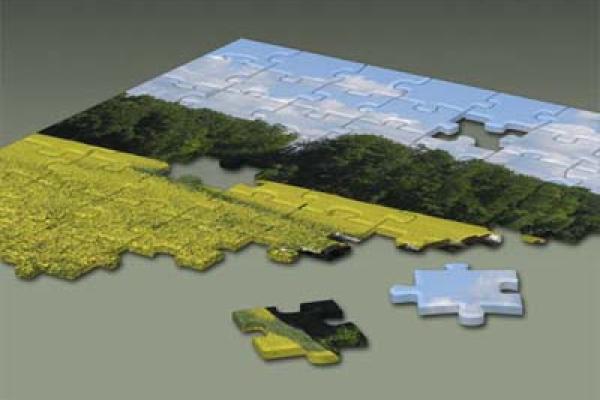
Many people like mathematics because it gives definite answers. Things are either true or false, and true things seem true in a very fundamental way. But it's not quite like that. You can actually build different versions of maths in which statements are true or false depending on your preference. So is maths just a game in which we choose the rules to suit our purpose? Or is there a "correct" set of rules to use? We find out with the mathematician Hugh Woodin.

Article

Hidden dimensions

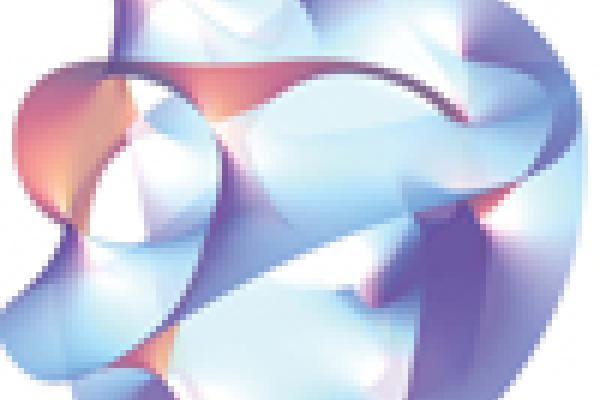
That geometry should be relevant to physics is no surprise — after all, space is the arena in which physics happens. What is surprising, though, is the extent to which the geometry of space actually determines physics and just how exotic the geometric structure of our Universe appears to be. Plus met up with mathematician Shing-Tung Yau to find out more.

News story

School students deliver cutting edge research

A group of school students-turned-researchers has delivered new data that will help scientists stem the spread of infectious diseases. A study designed by the students reveals social contact patterns among primary schools students. This type of information is crucial in mathematical models of how diseases spread, which can be used to test the effects of interventions like vaccination and school closures. The study was based on specially designed questionnaires which were handed out to primary schools and achieved an unprecedented response rate of nearly 90%.

News story
icon

Flying home with quantum physics

Quantum mechanics is usually associated with weird and counterintuitve phenomena we can't observe in real life. But it turns out that quantum processes can occur in living organisms, too, and with very concrete consequences. Some species of birds use quantum mechanics to navigate. And as Plus found out at a recent conference, studying these little creatures' quantum compass may help us achieve the holy grail of computer science: building a quantum computer.

News story

Benoît Mandelbrot has died

Benoît Mandelbrot, the father of fractal geometry, died last Thursday at the age of 85. Born in Poland in 1924, Mandelbrot had dual French and American citizenship and spent most of his working life in the US. He died of cancer in a hospice in Cambridge, Massachusetts.

News story

And the Nobel Prize in Mathematics goes to...

Well, it goes to no-one because there isn't a Nobel Prize for maths. Some have speculated that Alfred Nobel neglected maths because his wife ran off with a mathematician, but the rumour seems to be unfounded. But whatever the reason for its non-appearance in the Nobel list, it's maths that makes the science-based Nobel subjects possible and it usually plays a fundamental role in the some of the laureates' work. Here we'll have a look at two of the prizes awarded this year, in physics and economics.

Article

Wiring up brains

The human brain faces a difficult trade-off. On the one hand it needs to be complex to ensure high performance, and on the other it needs to minimise "wiring cost" — the sum of the length of all the connections — because communication over distance takes a lot of energy. It's a problem well-known to computer scientists. And it seems that market driven human invention and natural selection have come up with similar solutions.
News story

Things never get simpler - the work of Cédric Villani

What would you think if the nice café latte in your cup suddenly separated itself out into one half containing just milk and the other containing just coffee? Probably that you, or the world, have just gone crazy. There is, perhaps, a theoretical chance that after stirring the coffee all the swirling atoms in your cup just happen to find themselves in the right place for this to occur, but this chance is astronomically small.
News story
The Fields Medals 2010

The Fields Medals 2010

Over 3000 mathematicians have gathered to sounds of the tabla and bansuri playing traditional Indian music in the Hyderabad International Convention Centre, and they are all baiting their breath. They are all waiting for the announcement of the Fields medals, the highest honour in mathematics, and the prestigious Gauss, Nevanlinna and Chern Prizes. The hall is a colourful scene filled with mathematicians from around the world, including many local participants in beautiful saris and suits. You can hear a pin drop as the entire hall stands for the entrance of Pratibha Patil, the President of India, who will award the medals to the prize winners...
News story

Baby robots feel the love

Researchers have unveiled the first prototypes of robots that can develop emotions and express them too. If you treat these robots well, they'll form an attachment to you, looking for hugs when they feel sad and responding to reassuring strokes when they are distressed. But how do you get emotions into machines that only understand the language of maths?