Seeing Pythagoras
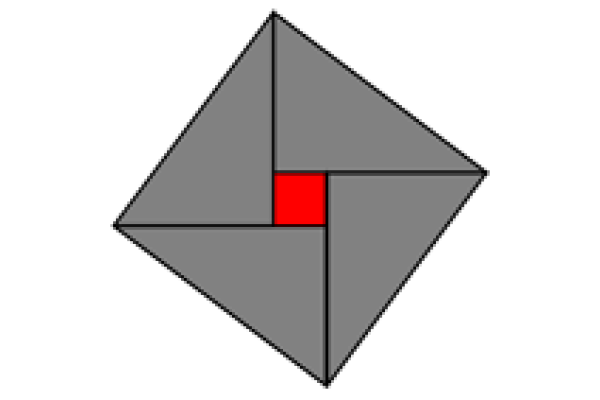
The great thing about geometry is that you can sometimes prove things using pictures. Enjoy these three great visual proofs of Pythagoras' theorem!
Can a mathematical object be said to exist if you can't construct it?
If you can prove that a statement can't possibly be false, does this mean it's true?
What are mathematical proofs, why do we need them and what can they say about sheep?
Paraconsistent mathematics is a type of mathematics in which contradictions may be true. In such a system it is perfectly possible for a statement A and its negation not A to both be true. How can this be, and be coherent? What does it all mean?
In the 1930s the logician Kurt Gödel showed that if you set out proper rules for mathematics, you lose the ability to decide whether certain statements are true or false. This is rather shocking and you may wonder why Gödel's result hasn't wiped out mathematics once and for all. The answer is that, initially at least, the unprovable statements logicians came up with were quite contrived. But are they about to enter mainstream mathematics?
Many people like mathematics because it gives definite answers. Things are either true or false, and true things seem true in a very fundamental way. But it's not quite like that. You can actually build different versions of maths in which statements are true or false depending on your preference. So is maths just a game in which we choose the rules to suit our purpose? Or is there a "correct" set of rules to use? We find out with the mathematician Hugh Woodin.
Kurt Gödel, who would have celebrated his 100th birthday next year, showed in 1931 that the power of maths to explain the world is limited: his famous incompleteness theorem proves mathematically that maths cannot prove everything. Gregory Chaitin explains why he thinks that Gödel's incompleteness theorem is only the tip of the iceberg, and why mathematics is far too complex ever to be described by a single theory.
Robert Hunt concludes our Origins of Proof series by asking what a proof really is, and how we know that we've actually found one. One for the philosophers to ponder...