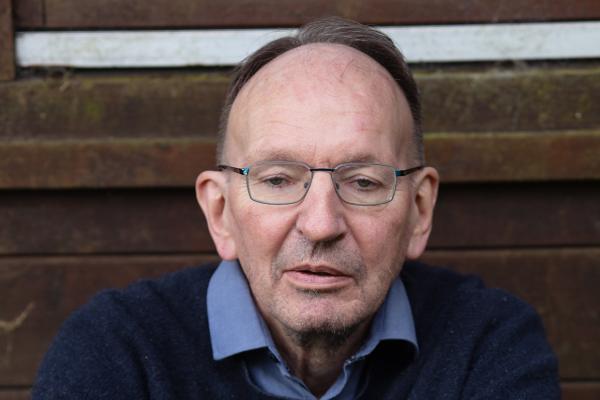
The Abel Prize 2026: Gerd Faltings
This year's Abel Prize has been awarded to the German mathematician Gerd Faltings for work that brings together number theory and geometry to solve equations.
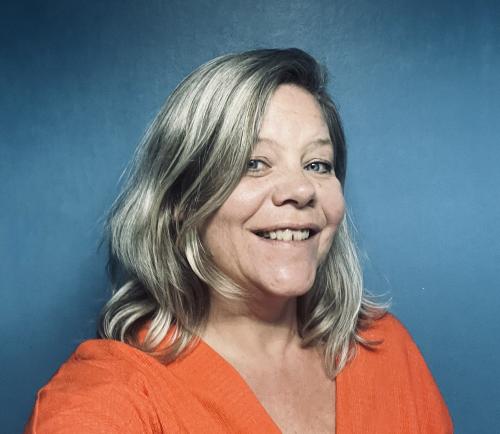
Marianne Freiberger is Editor of Plus. She joined Plus in 2005 after doing a PhD and then a three year postdoc at Queen Mary, University of London. As a researcher she worked in complex dynamics, the area of pure maths that has given us the Mandelbrot set. In the world of maths communication she has been Editor-in-Chief of the Mathscareers website, given presentations to mathematicians about how to communicate their work to a wider audience, and to journalists about how to deal with maths in the media. She has been a TEDx speaker and an invited speaker at the International Congress of Mathematicians in 2010.
Together with Rachel Thomas, Marianne has co-authored several popular maths books including Numericon: A journey through the hidden lives of numbers and Understanding numbers, and were editors on the book 50: visions of mathematics. They were Science Editors for the Discovery+ documentary series Universe Unravelled about the work of the Stephen Hawking Centre for Theoretical Cosmology.
In October 2022 Marianne and Rachel received a SPI-M-O Award for Modelling and Data Support (SAMDS) from the UK's Scientific Advisory Group for Emergencies. This award recognised their work with the JUNIPER modelling consortium to provide a wide audience (including public, press, policy makers and government) with clear and accessible explanations of some of the maths that was vital in responding to the COVID-19 pandemic.
This year's Abel Prize has been awarded to the German mathematician Gerd Faltings for work that brings together number theory and geometry to solve equations.
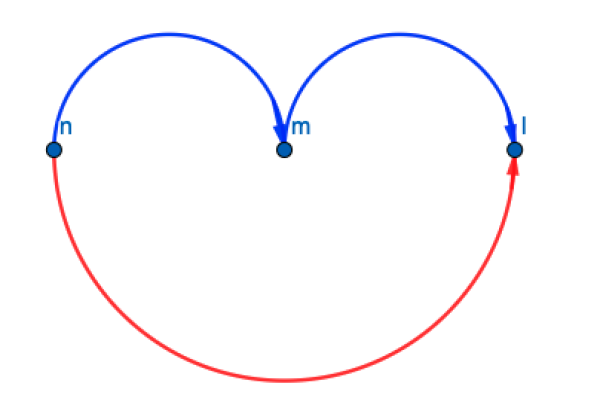
A short explanation of the fundamentals of category theory.
Category theory, which has previously been described as "abstract nonsense" turns out to be just the language we need to describe materials that may help us build quantum computers. Find out more in this article.
The quantum Hall effect is a curious phenomenon: not only does it make effects from quantum physics visible in the macroscopic world, it also links physics to the pure mathematical area of topology. Find out more in this article.
What does water feeding to ice have to do with symmetry? This article provides an answer and begins to tell the astonishing story of how theory once denounced as "abstract nonsense" may help us build quantum computers.
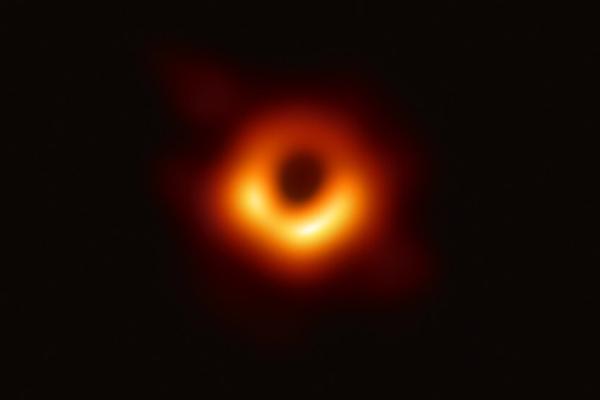
Gravitational waves have provided a wealth of information about black holes. But could other objects be hiding in this data too? Researchers are exploring this idea, which may also help resolve the mystery of dark matter.
We talk to Krieger about her work, sharing mathematics with wider audiences, and advice for young mathematicians
The mathematics of the future needs more specialist maths teachers, stronger university provision, and sustained research funding.
How confident is the Large Language Model chatbot that its answers are correct? And how confident can we be about this confidence? This article investigates.
Can topological data analysis create a revolution in the life sciences?
Researchers, policy makers and communicators have distilled out some key principles for making mathematical research more useful for policy makers.
Find out about a pioneering new project which builds mathematical models together with the people who are affected by them.