
Article

Problems of gravity
Why (some) physicists want to modify Einstein's general theory of relativity.

Marianne Freiberger is Editor of Plus. She joined Plus in 2005 after doing a PhD and then a three year postdoc at Queen Mary, University of London. As a researcher she worked in complex dynamics, the area of pure maths that has given us the Mandelbrot set. In the world of maths communication she has been Editor-in-Chief of the Mathscareers website, given presentations to mathematicians about how to communicate their work to a wider audience, and to journalists about how to deal with maths in the media. She has been a TEDx speaker and an invited speaker at the International Congress of Mathematicians in 2010.
Together with Rachel Thomas, Marianne has co-authored several popular maths books including Numericon: A journey through the hidden lives of numbers and Understanding numbers, and were editors on the book 50: visions of mathematics. They were Science Editors for the Discovery+ documentary series Universe Unravelled about the work of the Stephen Hawking Centre for Theoretical Cosmology.
In October 2022 Marianne and Rachel received a SPI-M-O Award for Modelling and Data Support (SAMDS) from the UK's Scientific Advisory Group for Emergencies. This award recognised their work with the JUNIPER modelling consortium to provide a wide audience (including public, press, policy makers and government) with clear and accessible explanations of some of the maths that was vital in responding to the COVID-19 pandemic.




Sometimes a piece of maths can be so neat and elegant, it makes you want to shout "eureka!" even if you haven't produced it yourself. One of our favourite examples is the art gallery problem.


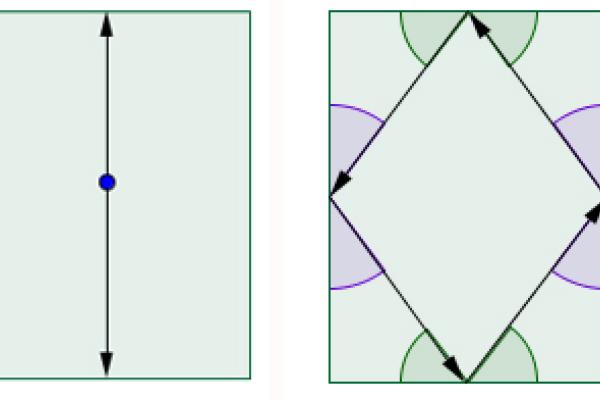
If you thought that billiards was a harmless game to play in the pub, think again. It's a breeding ground for chaos!