
Holly Krieger and the dynamics of numbers
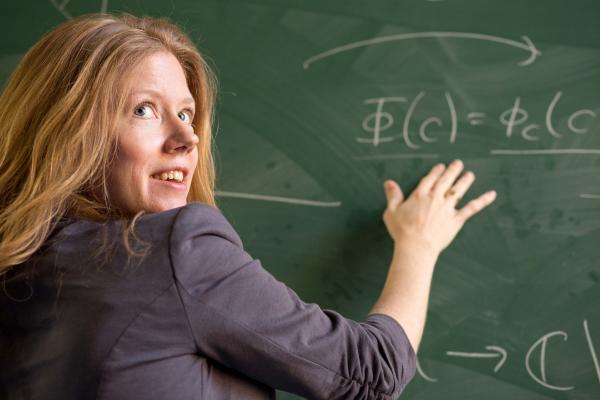
We talk to Krieger about her work, sharing mathematics with wider audiences, and advice for young mathematicians
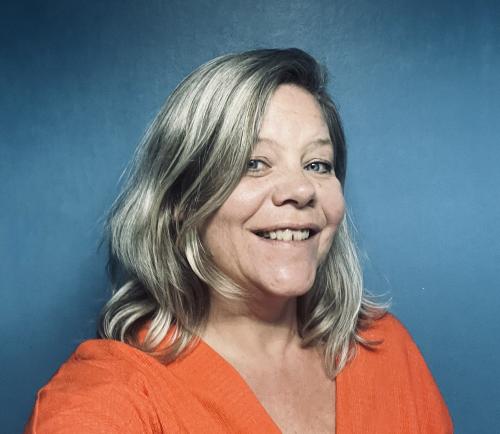
Marianne Freiberger is Editor of Plus. She joined Plus in 2005 after doing a PhD and then a three year postdoc at Queen Mary, University of London. As a researcher she worked in complex dynamics, the area of pure maths that has given us the Mandelbrot set. During her time as a researcher she also held various teaching engagements. In the world of maths communication she has been Editor-in-Chief of the Mathscareers website, given presentations to mathematicians about how to communicate their work to a wider audience, and to journalists about how to deal with maths in the media. She has been a TEDx speaker and an invited speaker at the International Congress of Mathematicians in 2010.
We talk to Krieger about her work, sharing mathematics with wider audiences, and advice for young mathematicians
The mathematics of the future needs more specialist maths teachers, stronger university provision, and sustained research funding.
How confident is the Large Language Model chatbot that its answers are correct? And how confident can we be about this confidence? This article investigates.
Can topological data analysis create a revolution in the life sciences?
Researchers, policy makers and communicators have distilled out some key principles for making mathematical research more useful for policy makers.
Find out about a pioneering new project which builds mathematical models together with the people who are affected by them.
Want to expand your horizon? Then discover one of the hardest problems in algebraic topology which has only recently been solved: the Kervaire invariant problem.
We continue our journey towards a proof of the Kervaire invariant problem.
Find out how random shapes shed light on one of the hardest problems in physics.
A story from geometry shows how developments in mathematics have fundamentally changed the way we think about the world around us.
We can't visualise it, but we can still think about it! And there are clever ways of glimpsing what it might look like.
A new language to talk about quantum physics is making calculations a whole lot easier.